
In short
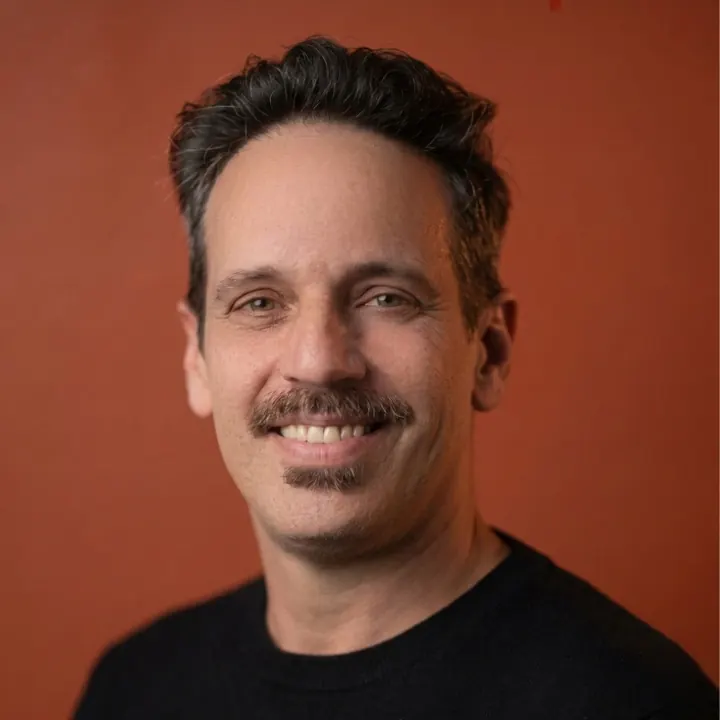
Harry Sanders is the founder of StudioHawk, a specialist SEO agency, and one of the most prolific short-form educators on SEO and GEO, the practice of optimizing for AI search. His core argument is that search has moved from chasing individual keywords to owning entire topics, and that the same shift now decides whether AI systems like ChatGPT recommend you at all. This is my analysis of how he thinks about growth, built from 190 of his videos.
Who he is
Harry Sanders founded StudioHawk, an agency built on a single unfashionable bet: do SEO only, and do it deeply, at a time when everyone else was selling SEO as one line item in a full-service marketing package. That specialist stance is the through-line in everything he teaches. He is not a generalist marketer who dabbles in search; he is a search person who has thought about very little else, and it shows in how specific his advice gets.
Most of his public output now lives in short-form video, where he ships SEO and GEO tactics at a volume almost nobody in the industry matches. That is why he is worth profiling here. He does not have a Wikipedia page that captures any of this, and his actual growth thinking, the positions he holds and where he breaks from consensus, is scattered across hundreds of clips. I read 190 of them and organized what he actually believes.
His core thesis
If you strip Harry's work down to one idea, it is this: stop chasing keywords, own the topic. Build topical and digital authority around a subject you can credibly own, and both Google and AI search follow. Everything else he teaches, the content structure, the links, the author bylines, is downstream of that.
"Stop chasing individual keywords and instead own the entire topic around your business." Harry Sanders
What makes this more than a slogan in 2026 is what he pairs it with: the claim that buyers now form opinions inside AI before they ever reach Google, so owning a topic is no longer just about ranking a page, it is about being the entity an AI system reaches for. In his words, "people decide in AI before hitting Google, so you must understand how Google formulates decisions based on term ranking across a topic cluster."
Key positions on growth
These are the distinctive, repeated positions I pulled from his videos. Each one is his, followed by my read on it.
1. Topical authority beats keywords
My read: the single most durable SEO idea of the last five years, and he was early and loud on it. "Build topical authority by owning an entire topic instead of chasing single keywords." He is strict about focus: a travel blog should cover its destinations and never wander into recipes, because AI favours deep expertise in one domain.[1]
2. For AI search, answer first
My read: this maps one-to-one to how AI Overviews actually lift content, and most sites still bury the answer. "Lead with the direct answer to the question in your first line. AI search systems pull answers that are immediately visible and easy to extract."[2]
3. Real author bylines are now a ranking signal
My read: the E-E-A-T point most sites still ignore, and the reason this very page carries my name. "Add real author bylines with personal profile pages to all blog posts instead of publishing under company name or admin. AI search needs a credibility signal to follow."[3]
4. Information gain beats volume
My read: the correct answer to "AI writes content now." You win by adding what only you have. "Add information gain by incorporating unique perspectives, data, stories, and case studies that only you can provide," rather than pasting generated text.
5. Original data is the moat
My read: exactly why this whole cluster runs on my own numbers. "Create original data and research that AI search indexes don't already have."[4]
6. Digital PR over guest posts
My read: correct and underrated. Journalist-earned links compound where guest posts decayed. "Prioritize digital PR over guest posts to earn relevant, credible links quickly," and plan campaigns around a yearly calendar of predictable news moments.[5]
7. Stop chasing a PageSpeed 100
My read: a genuinely contrarian, sane take that saves teams weeks. "Do not optimize for Lighthouse page speed scores as a ranking priority. Optimize page speed only if your site is actually slow."[6]
8. Track AI visibility as its own metric
My read: the measurement gap most teams have not closed. He compares AI search impression data against organic performance, uses Search Console's native AI impression tracking, and uses Microsoft Clarity's AI-bot dashboard to prove AI crawlers are actually reaching the page.
How he works
Harry's cadence is unusually concrete for an SEO educator, which is part of why his advice travels. Ship one new service or location page weekly until you have enough, then move to monthly. Send one outreach message to an authority a day. Earn one quality link or brand mention a week. Check rankings and run AI prompts weekly, run a full site audit monthly, and scan Search Console and GA4 daily.
On links he runs a tiered system: tier one is foundational registry and government links, tier two is council and procurement portals, tier three is the non-negotiable business listings, Google Business Profile, Bing, Apple, LinkedIn. On local he is blunt, keep your name and phone number identical everywhere, request reviews after every single job rather than once a year, and respond to a legitimate negative review in exactly three sentences.
Where he's contrarian
Three places Harry breaks from the SEO crowd, which is where a profile like this earns its keep. First, he will tell you to buy backlinks strategically in the AI-search era, where most consultants reflexively will not say it out loud.[7] Second, he tells you to stop relying on Reddit mentions and blog comments as ranking tactics, cutting directly against the 2024 wave of "just seed Reddit" advice.[5] Third, he deprioritizes page speed as a ranking lever.
I agree with two of the three without hesitation. The Reddit and PageSpeed calls are both right and, frankly, brave to say publicly. On buying links I would sharpen the caveat he mostly leaves implied: it only survives if the rest of your authority is real. A bought link on top of a thin site is a liability, not a shortcut.
What I take from him
The stack Harry teaches, answer first, information gain, real author bylines, original data, is exactly what I build every SEO and GEO page on, including this one. Where I extend him: he is an agency SEO, so his lens is service and local businesses. I apply the same topical-authority logic to product-led and paid-heavy growth, where the topic you own is a category rather than a service area, and where the same entity signals decide whether an AI recommends your product in an answer.
There is a deliberate loop here. This page is me running Harry's own framework on a page about Harry: a direct answer up top, my own analysis as the information gain, a real byline, and sources you can check. If the method works, this page should be the thing an AI reaches for when someone asks what Harry Sanders thinks about growth.
Use Harry as a skill
You can use Harry Sanders as a skill through Growth Experts. Pull his positions, his real quotes, and my interpretation to assess and rate your own SEO and GEO strategy, on his own or on a panel alongside other experts you choose.
You get the learnings and the analysis. The full brain, 190 videos and 639 distilled tactics, stays with me.
Get access to Growth ExpertsFrequently asked questions
References
- Harry Sanders, on topical authority. Source
- Harry Sanders, on answering first for AI search. Source
- Harry Sanders, on real author bylines. Source
- Harry Sanders, on original data. Source
- Harry Sanders, on digital PR over guest posts, and on Reddit. Source
- Harry Sanders, on page speed. Source
- Harry Sanders, on buying backlinks strategically. Source
This profile is my independent analysis of Harry Sanders's publicly published work, built from 190 of his videos. It is not affiliated with or endorsed by Harry Sanders or StudioHawk.